

Somewhere in your customer database, two groups are hiding. One is a small minority who will buy from you three, five, ten times. The other is the overwhelming majority who will never make a second purchase. You paid the same amount to acquire both. But one group is putting you in debt. The other is carrying your company.
LTV:CAC is how elite brands unpack this problem. More than a number, LTV:CAC is an entire framework for understanding the health of your company. It tells you how much budget you can grant marketing. It tells you how much future revenue you can expect from existing customers. And it tells you whether money is leaking out of your funnel, or whether there are massive opportunities you’re leaving on the table.
Your business is an engine. LTV:CAC is how you measure how fast it goes.
Fast Stats
- 80%: In most Retail brands, ~80% of customers never make a second purchase.
- 50%: The small minority of customers that buy 3+ times usually represent 50% of revenue.
- 1%: Often a 1% reduction in churn can pay for 100% of a company's marketing budget.
How do elite retail brands use LTV:CAC?
At Latticework Insights, we’ve spent the last 8 years working with over 80 brands helping them get to LTV:CAC.
But most brands aren’t able to calculate LTV. Often what they are looking at is systems like Daasity, Triple Whale, and Polar Analytics, which compress high and low spenders into a single average. They don’t discern between customers acquired today vs last year. They don’t account for margins, seasonality, or one-time events like COVID or tariffs.
The problem is, they need to know their LTV so they can figure out what to spend on marketing CAC on a per-customer basis. Their CFOs lose visibility into their unit economics and can’t do proper financial forecasting. Their COOs can’t properly prioritize acquisition versus retention. And their investors, lenders, and acquirers don’t trust that there is a healthy company.
What separates retail brands from elite retail brands is their ability to solve many things:
1) Data Sprawl: Retail brands need to solve their data sprawl problem so that they can efficiently calculate CAC (which aggregates Meta, Google, and TikTok together) as well as LTV (which aggregates Shopify, Amazon, and Target together).
2) LTV:CAC: Retail brands need to understand their LTV:CAC ratio. Too close to 1? Their profit margin is struggling. Too close to 4? They’re not investing aggressively enough in their own growth. Tiny fluctuations in this ratio have massive top-line and bottom-line consequences.
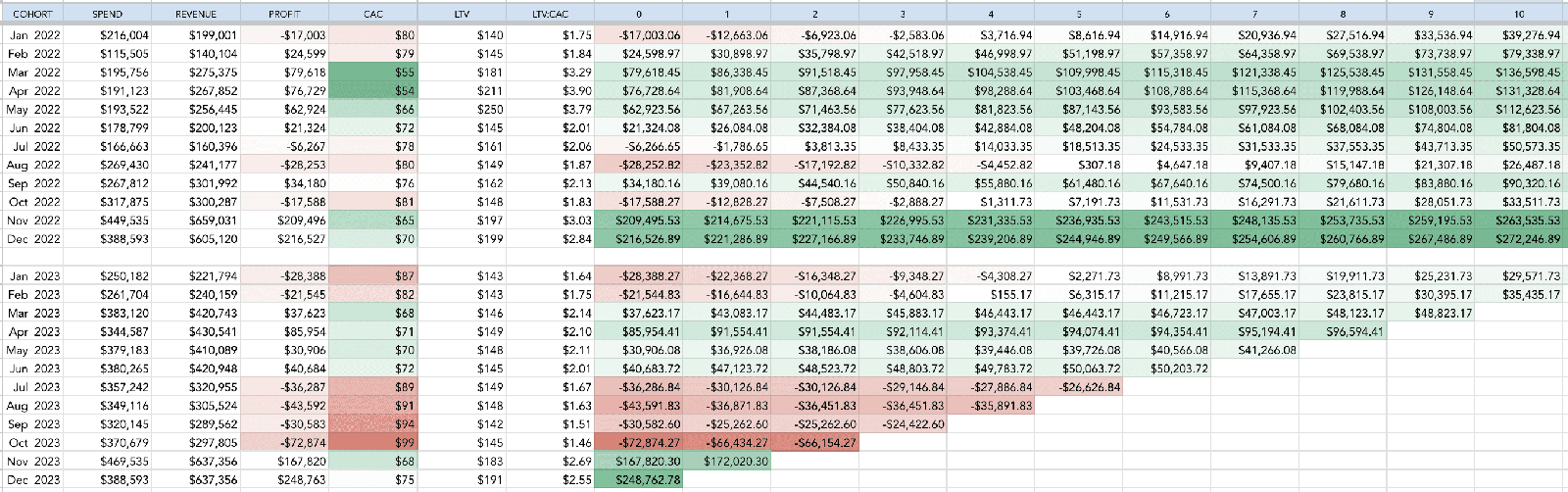
3) LTV Cohorts: Retail brands need to understand how LTV:CAC varies throughout the year, as well as how it varies throughout the lifetime of a customer. Segmenting customers into monthly “cohorts” (so we understand how Black Friday customers vary from Memorial Day customers) and showing how they generate revenue over time (often Black Friday customers don’t buy again till next year, whereas Memorial Day customers might buy every month) is a major unlock.
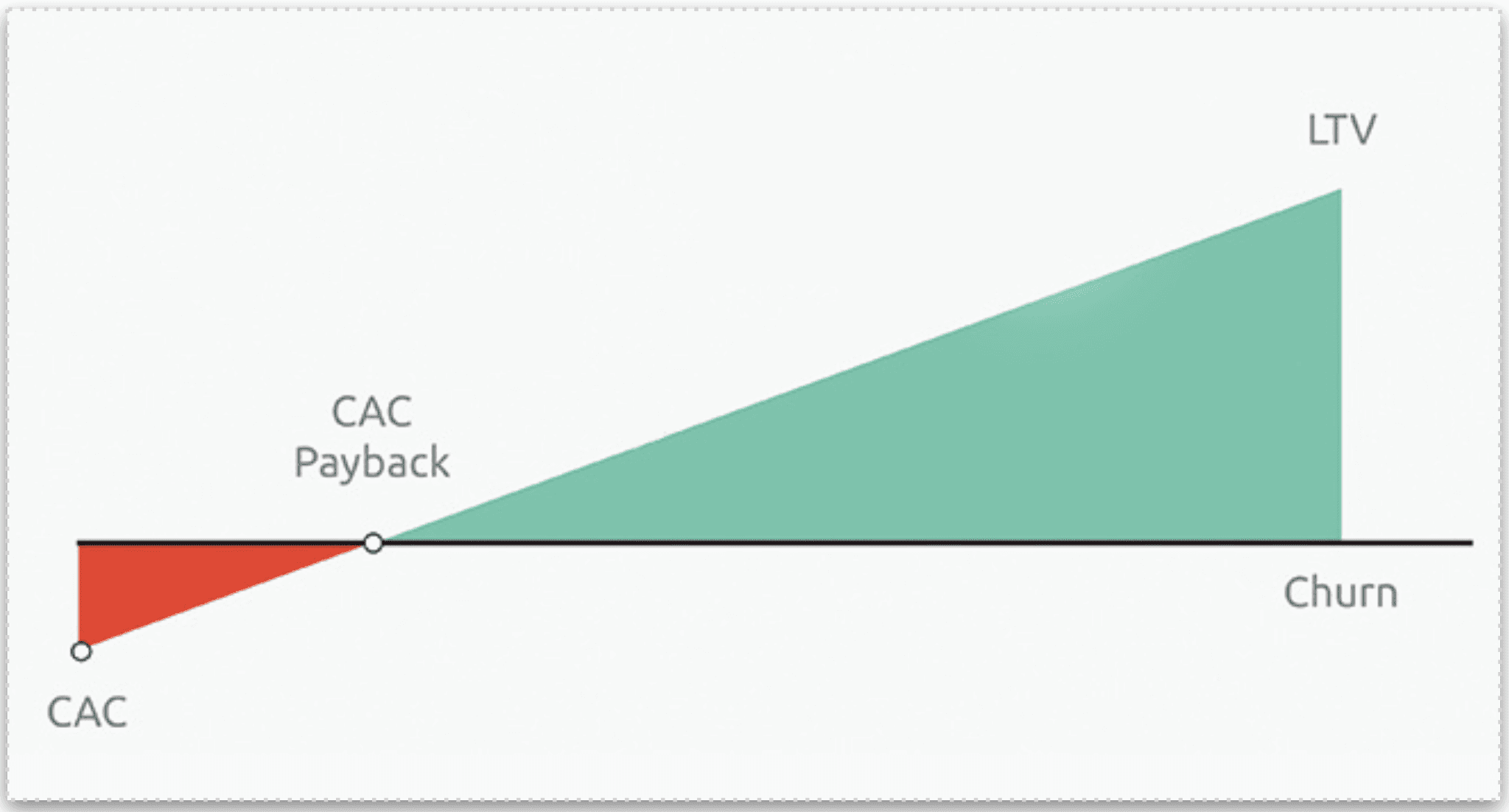
4) CAC Payback: Retail brands need to understand whether being profitable on a customer’s first purchase is important or not. Maybe they spent $100 in CAC on Meta to acquire a customer who bought a $50 item. If their retention is good and their customers reliably make repeat purchases, maybe this isn’t such a big problem. That $100 CAC will “pay back” after a few orders. But if retention is bad, they need to make sure they keep CAC closer to $25. Understanding their typical “CAC payback” is crucial to setting marketing budgets and forecasting future revenue.
5) Forecasting: Retail brands need to be able to predict what their customers are likely to do in the future. As Data Science evolves and AI accelerates the ability to build statistical models, predictive techniques such as Buy Till You Die are becoming table stakes. Brands can use their historical data to predict things like:
- Number of future purchases
- Timing of future purchases
- Amount of future revenue (LTV)
- Whether the customer is still buying (“alive”) or has churned (“dead”)
References
- How Elite Brands Use LTV:CAC Analytics to Outsmart Their Competition (Latticework Insights)
- “Counting Your Customers” the Easy Way: An Alternative to the Pareto/NBD Model, by Fader, Hardie, and Lee (the Wharton Buy Till You Die model)
FAQ
What is the typical retention rate for a $50–100M Retail DTC e-commerce brand?
Most $50-100M retail DTC brands see only 20-30% of customers ever make a second purchase. Elite brands push repeat rates past 40%.
What is the typical LTV:CAC ratio for a $50–100M Retail DTC e-commerce brand?
A healthy LTV:CAC ratio for a retail DTC brand is around 3:1. Below 2:1, margins are struggling; above 4:1, the brand is under-investing in growth.
What is the typical CAC Payback period for a $50–100M Retail DTC e-commerce brand?
Elite retail brands target a CAC payback period of 6-12 months. Anything over 18 months puts cash flow at risk.
How do I build an LTV Cohort using SQL?
Group customers by first-purchase month in your data warehouse, then sum revenue by months since acquisition. The resulting cohort triangle shows exactly how LTV builds over time.
How do I predict my Customer Lifetime Value?
Predictive LTV models such as Buy Till You Die use each customer’s purchase recency and frequency to forecast future revenue, far more accurately than historical averages.
How do I implement the Wharton Buy-till-you-die model?
The BG/NBD and Gamma-Gamma models behind Buy Till You Die run in open-source Python libraries on the transaction history already sitting in your data warehouse.
How do I customize Daasity, Triple Whale, and Polar Analytics LTV calculation?
Mostly you can’t: feeder tools lock their LTV definitions. That is why brands needing margin-aware, cohort-level LTV graduate to a warehouse-based model.
About Tim Shea & Latticework Insights
Tim Shea is the Founder & CEO of Latticework Insights, who has spent 25 years at the intersection of Data Science & Retail. Tim is an expert in technologies such as Snowflake, Fivetran, and LangChain as well as LTV:CAC, Retention, Financial Forecasting, and Growth Analytics. Tim’s clients include Sweetgreen, NBA, UFC, Converse, Princess Cruises, Reddit, Quora, and Salesforce.
Latticework Insights is a Los Angeles-based Data Science Agency that provides Data Leadership to help Retail Brands become Elite Retail Brands. Latticework focuses on reconnecting brands’ fragmented SaaS systems, bringing data together from Meta, Google, TikTok, Shopify, Amazon, and Salesforce to help brands see their business more clearly and graduate to their next stage of growth.
Latticework is an elite consulting firm with 25 years of technology expertise in ETL, Data Warehousing, Data Visualization and Agentic AI as well as retail expertise in LTV:CAC Modeling, Retention, Unit Economics, and Financial Forecasting.
If you can’t say what your next customer is actually worth, get in touch. Building that LTV:CAC engine is exactly where Latticework starts.