
A fractional Chief Data Officer is a senior data executive who works for your company part time, usually one to two days a week, and owns the same agenda a full-time CDO would: the data stack, the analytics roadmap, the models behind LTV:CAC and retention, and the people who run them. Retail and DTC brands between $50M and $100M in revenue use the role because they have a full-time CDO’s problems and a part-time CDO’s budget.
Who hires a fractional Chief Data Officer?
The hire is usually made by a CFO, COO or CEO at a brand that has outgrown its dashboards. The signs are familiar: Meta, Google, Shopify and Klaviyo each report a different revenue number; nobody can say what a customer is worth by cohort; the first data analyst quit or never got hired; and the board has started asking about AI. A full-time Chief Data Officer is a six-figure salary plus a team. A fractional CDO gets the same work started in weeks.
What does the fractional CDO do in the first 90 days?
Days 1 to 30: see the whole business in one place. Inventory every data source (Meta, Google, TikTok, Shopify, Amazon, Salesforce, the ERP), stand up or repair the warehouse (Snowflake or BigQuery, loaded by Fivetran), validate the numbers against the source systems, and ship one dashboard that marketing, finance and operations all agree on. This is the same 30-day blueprint described in How to Build a Marketing Data Warehouse in 30 Days.
Days 31 to 60: get to LTV:CAC. Build the customer model: LTV cohorts by acquisition month, contribution margin per order, CAC payback by channel, and the SMART Framework cuts (Speed, Margin, Attribution, Retention, Tiers). This is where the budget conversation changes, because marketing spend can now be set from payback instead of from last year’s number.
Days 61 to 90: make it run without us. Train the team, write the definitions down, decide what gets automated, and put AI to work where it earns its keep: agents that draft the weekly readout, answer questions against the warehouse, and flag anomalies, with a human deciding what to do about them.
What is covered
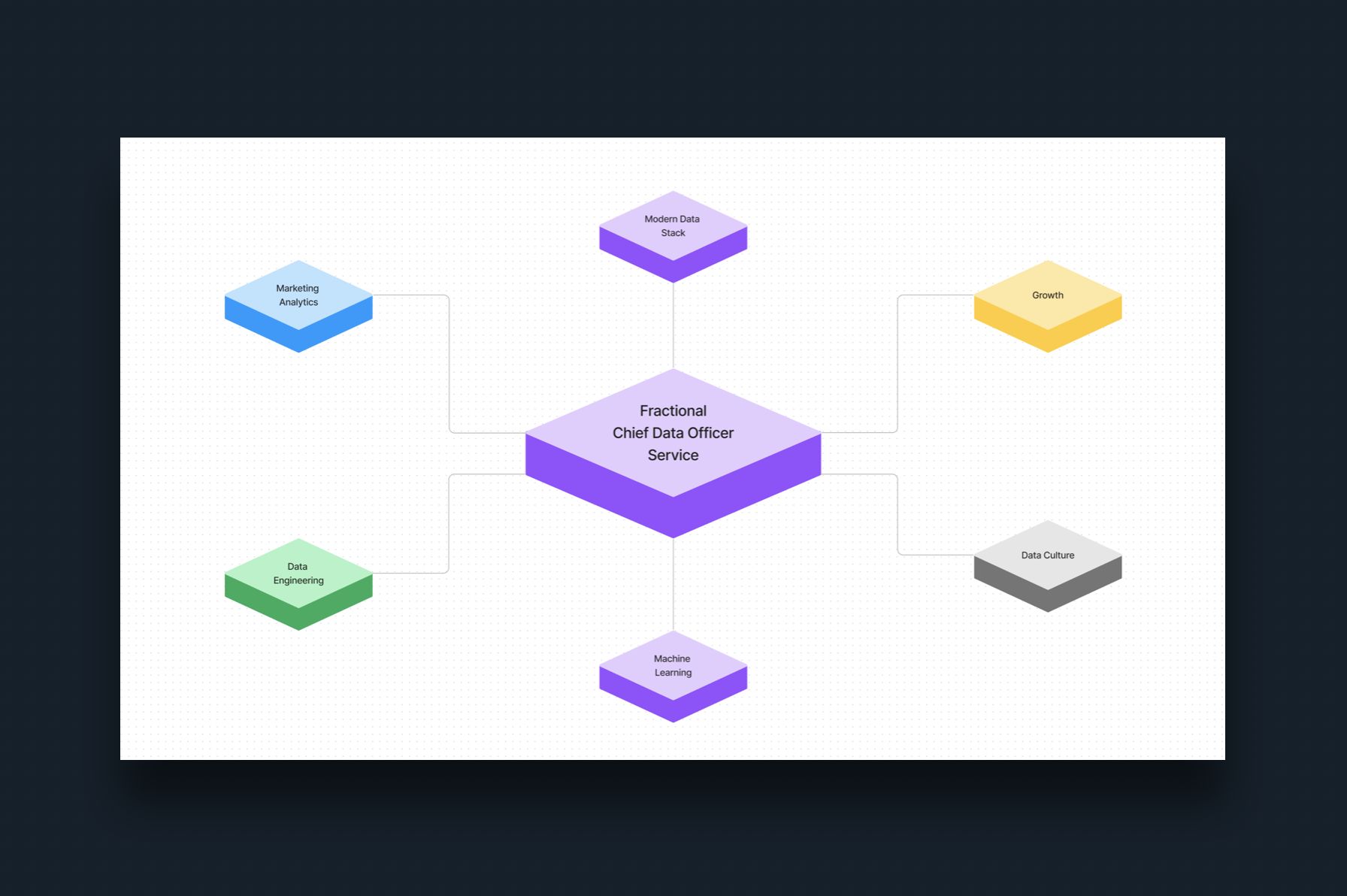
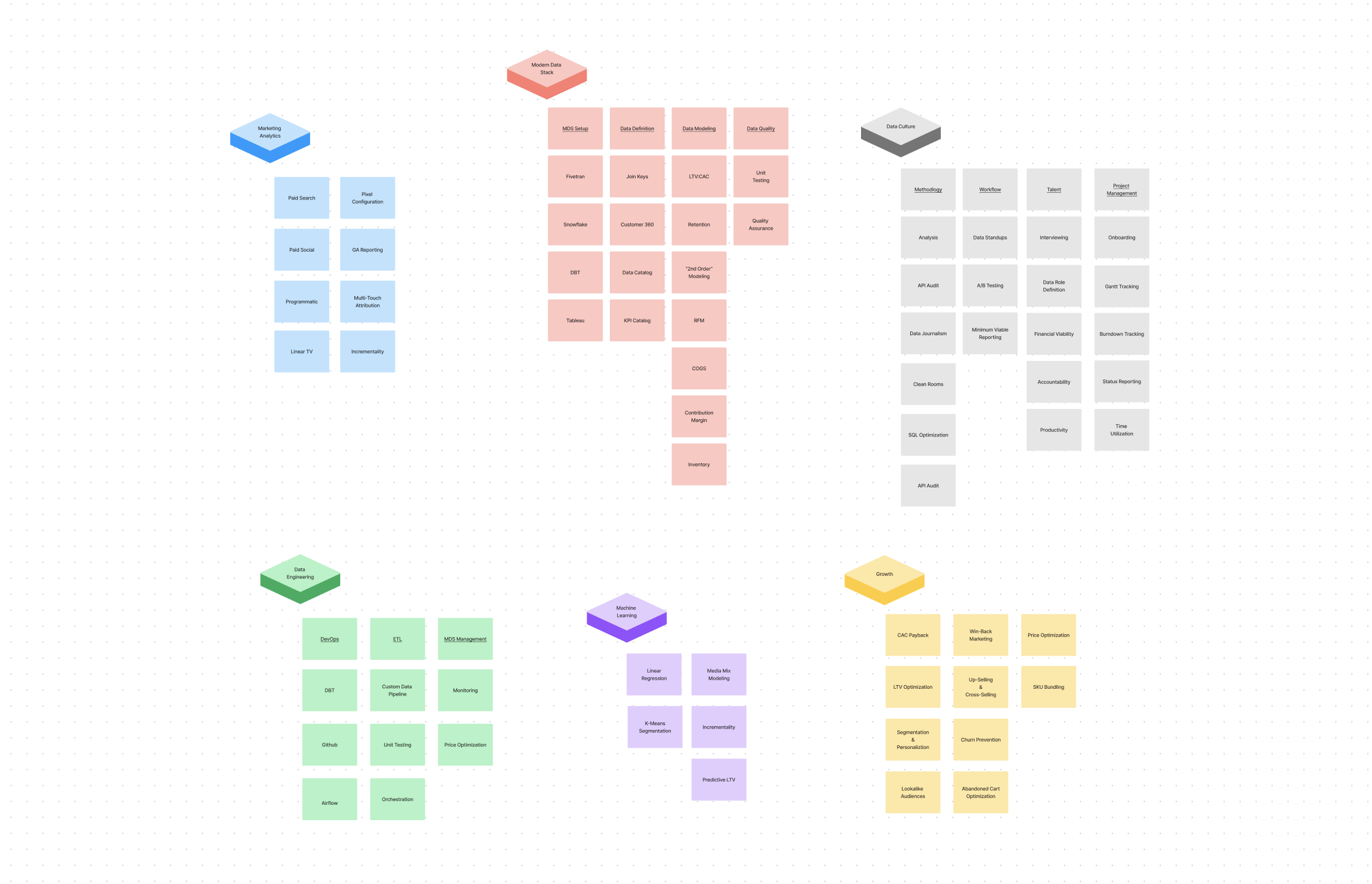
The service spans six areas, each backed by blueprints Latticework has reused across 70+ brands over eight years:
- Modern Data Stack implementation (Fivetran, Snowflake, BigQuery, Tableau, Sigma)
- Data engineering and ETL, including the integrations the connector vendors do not cover
- Growth marketing analytics: LTV:CAC, retention, CAC payback, media mix
- Predictive analytics and machine learning: Buy Till You Die models, forecasting, customer tiers
- Agentic AI on top of the warehouse
- A/B testing and data culture: one owner per number, written rules of engagement
Fractional CDO, fractional CFO, or a data analyst?
A fractional CFO owns the P&L and the forecast; they need clean data and rarely build it. A data analyst builds reports inside the tools you already have and cannot change the architecture. A fractional CDO sits between them: senior enough to set the roadmap and talk to the board, hands-on enough to build the warehouse and the models. Many Latticework engagements run alongside a fractional CFO, with the CDO supplying the cohort and margin data the CFO’s forecast depends on.
How the engagement works
Fractional and ongoing, scoped to a fixed number of days per month, with a 90-day plan agreed up front and reviewed quarterly. Smaller scopes start as a Lite sprint or a Basic build; brands that want a weekly cadence without the executive role use Copilot.
About Tim Shea & Latticework Insights
Tim Shea is the Founder & CEO of Latticework Insights, who has spent 25 years at the intersection of Data Science & Retail. Tim is an expert in technologies such as Snowflake, Fivetran, and LangChain as well as LTV:CAC, Retention, Financial Forecasting, and Growth Analytics. Tim’s clients include Sweetgreen, NBA, UFC, Converse, Princess Cruises, Reddit, Quora, and Salesforce.
Latticework Insights is a Los Angeles-based Data Science Agency that provides Data Leadership to help Retail Brands become Elite Retail Brands. Latticework focuses on reconnecting brands’ fragmented SaaS systems, bringing data together from Meta, Google, TikTok, Shopify, Amazon, and Salesforce to help brands see their business more clearly and graduate to their next stage of growth.
The service was announced in January 2024; the original press release is on the press page.